


How Integrated pDNA-to-mRNA-LNP Manufacturing Reduces CDMO Handoffs
Written by Dr Vanessa Kee, Global Marketing Lead
Table of contents
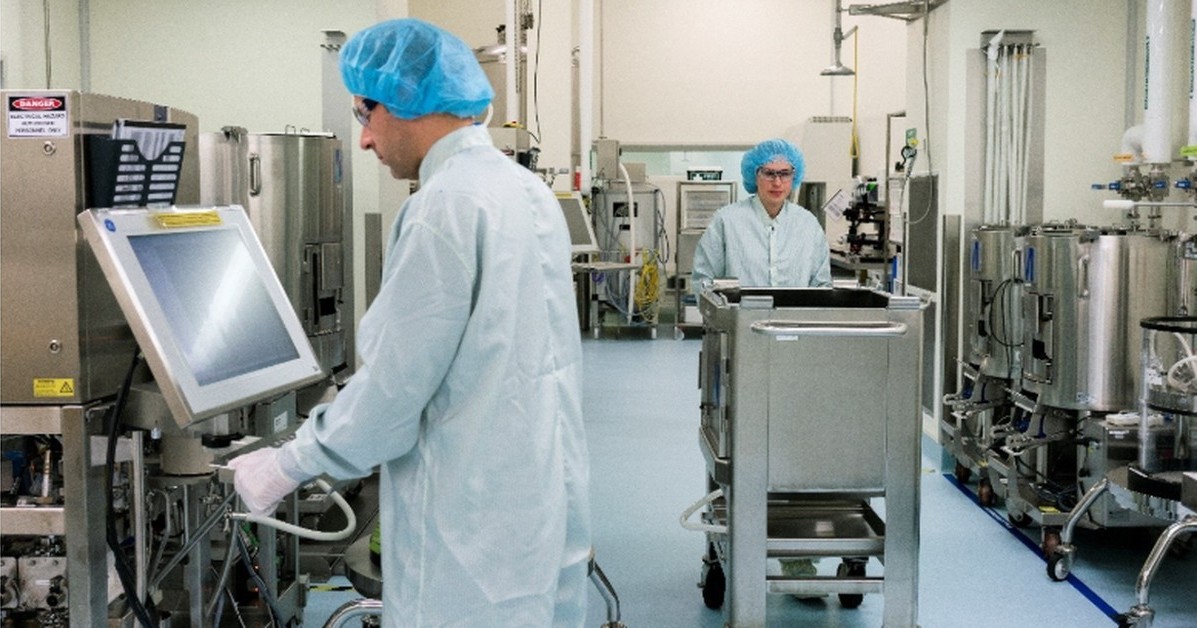
An mRNA program moves through several technically distinct manufacturing stages before reaching finished drug product: plasmid DNA production and preparation of the DNA template, mRNA drug substance manufacturing, LNP formulation and encapsulation, and sterile fill-finish. These stages are technically interdependent. In many programs they are organisationally separate, performed by different providers under different quality systems, rather than consolidated with an integrated mRNA LNP manufacturer.
That separation creates work that sits outside the manufacturing itself: technology transfer, material movement between organisations, separate quality interfaces, scheduling dependencies across independent production calendars, and documentation that has to be reconciled for a single regulatory submission.
Integrated mRNA manufacturing describes a model where several consecutive stages sit with one organisation. Integration does not necessarily mean every stage takes place at one site. At BioCina, pDNA manufacturing, mRNA drug substance manufacturing, and LNP formulation and encapsulation are performed in Adelaide, with sterile fill-finish at the Perth facility. This removes external company-to-company interfaces across the drug substance stages while retaining a coordinated site-to-site transfer for drug product manufacturing.
This article outlines where interfaces occur in an mRNA manufacturing supply chain, how different integration models address them, and what sponsors typically assess when evaluating an mRNA manufacturing partner.
Explore LNP Formulation
Explore mRNA & LNP Capabilities
How Does Integrated mRNA-LNP Manufacturing Compare with a Multi-Vendor Model?
In a multi-vendor mRNA manufacturing supply chain, transfers between organisations involve several parallel activities, with the scope depending on the manufacturing stage and the nature of the transfer.
Technology transfer
Process knowledge moves between organisations through documentation, protocols, and technical meetings. Analytical procedures transferring between organisations require the receiving laboratory to be qualified to perform them as intended. The scope of that work depends on the method, its existing qualification, and the receiving laboratory’s capabilities. [1]
Material movement
Intermediates physically move between facilities, requiring appropriate logistics, cold chain management where applicable, shipping documentation, and receipt and acceptance procedures at the destination.
Separate quality interfaces
Each organisation operates under its own quality management system. Quality agreements define responsibilities at the interface, while change control, deviation management, and batch record practices are governed by the respective organisations’ procedures.
Scheduling dependencies
Each organisation manages its own production calendar, and a change at one stage often affects scheduling and availability at the next.
Documentation continuity
CMC documentation generated across multiple organisations requires coordination to maintain a consistent account of the manufacturing process and control strategy in regulatory submissions.
An integrated model reduces the number of external coordination interfaces by keeping consecutive manufacturing stages within one provider. It does not remove the underlying technical and quality requirements. Material specifications, testing, documentation, and change control still apply, while transfers between sites continue to require appropriate planning, controls, and coordination.
What Does Integrated pDNA-to-mRNA-LNP Manufacturing Mean?
Integrated mRNA manufacturing describes several different arrangements, and the operational difference between them matters.
Single-site integration places manufacturing stages within one provider at one site. Multi-site integration keeps stages with one provider across more than one facility, with site-to-site transfers managed internally. Partner-network coordination has one provider managing a program in which some stages are performed by external partners.
All three support program coordination, but they differ in how many external interfaces remain and how those interfaces are managed. An integrated mRNA LNP manufacturer performing consecutive stages in-house removes company-to-company interfaces between those stages. A provider coordinating external partners retains those interfaces while centralising their management.
BioCina’s model combines in-house integration across the Adelaide drug substance stages with a coordinated transfer to Perth for drug product manufacturing.
From pDNA to mRNA Drug Substance: Building Continuity Upstream
Plasmid DNA is a critical starting material for mRNA manufacturing. The pDNA workflow typically includes construct preparation, master and working cell bank establishment, fermentation and downstream purification. Where pDNA provides the transcription template, the purified plasmid is linearised before in vitro transcription (IVT). The IVT process produces mRNA, which undergoes downstream processing and purification before testing against the applicable drug substance specifications.
Performing pDNA to mRNA manufacturing within one organisation reduces the need for cross-company material transfers and the coordination that goes with them. Material specifications, appropriate testing, documentation and quality controls still apply. BioCina manufactures plasmid DNA and mRNA drug substance within its Adelaide Nucleic Acid Suite.
Further detail is available on BioCina’s pDNA manufacturing and mRNA drug substance manufacturing pages.
Connecting mRNA Drug Substance with LNP Formulation and Encapsulation
The LNP formulation and encapsulation process converts purified mRNA drug substance into formulated material for drug product manufacturing.
Coordination between these stages matters because the characteristics of the mRNA and the formulation process can influence the quality attributes of the resulting LNPs. Attributes considered during LNP characterisation include particle size, polydispersity, and encapsulation efficiency. The extent to which these and other attributes are assessed during development, in-process testing, and batch release depends on the product and its analytical control strategy. mRNA identity and integrity are relevant to drug substance control, with additional RNA-related and formulation attributes assessed after encapsulation depending on the program.
When drug substance manufacturing and mRNA LNP manufacturing sit with one organisation, formulation development, encapsulation, process transfer, scale-up, and analytical work are planned together rather than negotiated across a vendor boundary. BioCina performs LNP formulation and encapsulation at Adelaide, in the same suite used for pDNA and mRNA drug substance manufacturing.
From Drug Substance to Drug Product Manufacturing
LNP-formulated material produced at Adelaide follows one of two routes depending on batch size. Small-scale hand filling is being established at the Adelaide site, keeping early clinical supply within the same facility as drug substance manufacturing. Larger-scale programs transfer to Perth for mRNA drug product manufacturing and mRNA fill finish.
The transfer to Perth is a site-to-site transfer, with the planning, material movement, documentation, and scheduling coordination any inter-site transfer requires. Because both sites operate within BioCina, the transfer is coordinated within the same organisational framework and commercial relationship rather than between two separate companies with a negotiated quality agreement. Site-specific procedures, material transfer controls, documentation requirements, and quality responsibilities still apply.
Program coordination across the two sites covers technical transfer planning, material logistics, documentation alignment, and coordination of release-related activities.
How Integrated Quality Oversight Supports Program Continuity
Quality oversight across an mRNA manufacturing pathway covers documentation continuity, change control, deviation management, batch records, material traceability, and release.
Across separate organisations, quality agreements define responsibilities at each interface, and documentation from each party must be coordinated to support regulatory submissions. Within one organisation, responsibilities can be managed internally, with transfers between sites governed by defined procedures, documentation requirements and site-specific quality controls. Both models are used across the industry and can support compliant manufacture when responsibilities and controls are appropriately defined.
Integration does not remove the technical work of manufacturing. Process characterisation at each scale and analytical method development and qualification remain part of advancing a program toward clinical and later-stage supply. When a manufacturing process or site change could affect product quality, the need for and scope of a comparability assessment depend on the nature of the change, the product, and the applicable regulatory requirements. [2]
Evaluating an Integrated mRNA-LNP Manufacturer: Questions to Ask
Sponsors assessing an LNP manufacturing CDMO benefit from looking beyond the individual stage to understand how the process connects to subsequent manufacturing and what transfer responsibilities remain. Sponsors evaluating an integrated mRNA LNP CDMO commonly do so when reducing external vendor interfaces, planning connected development and manufacturing stages, preparing for scale-up, or seeking continuity from drug substance through to drug product supply.
Practical questions when assessing an mRNA manufacturing CDMO:
- Which stages are performed in-house, and which are subcontracted?
- How many sites does the pathway cross, and how are site-to-site transfers governed?
- How is quality oversight coordinated across stages and sites?
- Which analytical methods transfer with the process, and which are re-established at the receiving site?
- What manufacturing scales are available at each stage?
- What timeline assumptions are built into the program plan?
- Who owns program coordination across stages?
| Multi-Vendor Consideration | Integrated Model Consideration |
|---|---|
| Multiple external vendor interfaces | Fewer external interfaces to coordinate |
| Cross-company technology transfers | More connected transfer planning where stages are integrated |
| Separate quality interfaces | Coordinated quality oversight where applicable |
| Cross-vendor material logistics | Coordinated material movement between integrated stages and sites |
| Independent production schedules | Connected program planning and milestone visibility |
| Multiple technical contacts | Closer coordination between technical teams |
Building a More Connected Path from pDNA to Drug Product
The way mRNA manufacturing stages are organised shapes how sponsors manage technology transfer, material movement, quality interfaces, and program planning.
As an integrated mRNA LNP manufacturer, BioCina performs pDNA manufacturing, mRNA drug substance manufacturing, and LNP formulation and encapsulation with small-scale hand filling being established there and large-scale sterile fill-finish at its Perth facility.This provides a connected end-to-end mRNA manufacturing pathway within one CDMO, with the site-to-site transfer applying to larger-scale drug product manufacturing.
For sponsors evaluating an mRNA manufacturing partner, understanding which stages are performed in-house, how transfers are managed, and how quality oversight is coordinated across sites is an important part of assessing the right manufacturing model.
Ready to Scale Your LNP Formulation?
From lipid screening through cGMP supply, BioCina supports LNP programs as a single manufacturing partner, with in-house pDNA and mRNA manufacturing upstream and sterile fill-finish operations in Perth downstream.
Request an LNP Consultation