

LNP Formulation Development: From Lipid Screening to cGMP Manufacturing
Written by Dr Vanessa Kee, Global Marketing Lead
Table of contents
Lipid nanoparticles are nanoscale delivery vehicles, protecting nucleic acid and other payload molecules from degradation and facilitating their uptake into target cells. For mRNA and many other nucleic acid therapeutics, an effective delivery system is critical to protect the payload and support intracellular delivery. Ionizable lipid composition, PEG-lipid content, helper lipid ratio, particle size, and other formulation attributes influence particle stability, cellular uptake, biodistribution, and biological activity, making lipid nanoparticle (LNP) formulation development an important contributor to product performance rather than a routine processing step.
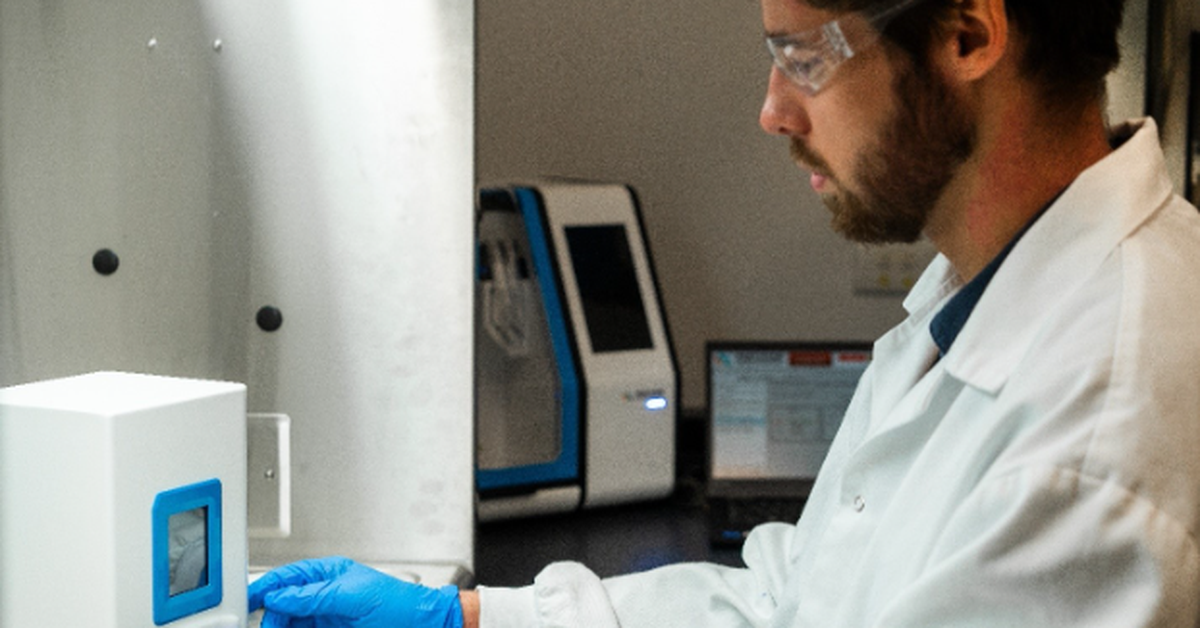
As an LNP formulation CDMO, BioCina formulates and encapsulates LNP within its dedicated Adelaide Nucleic Acid Suite, using non-turbulent microfluidic mixing technology from Precision NanoSystems. Formulation development spans early lipid and payload screening through cGMP manufacturing, within the same quality system used across BioCina's nucleic acid and biologics portfolio.
That positions BioCina as an integrated LNP CDMO, with formulation and encapsulation connecting directly to in-house mRNA manufacturing and pDNA and to sterile fill-finish operations in Perth.
Explore LNP Formulation
Discuss Your LNP Program
Key Challenges in LNP Formulation Development:
How a Flexible, Single-Site Platform Addresses Them
Formulation Stability and Particle Characteristics
LNP particle characteristics, including size, polydispersity, and encapsulation efficiency, are sensitive to formulation and process conditions. Inconsistent mixing environments and poorly controlled process parameters often result in particle populations varying from batch to batch, potentially affecting product performance and making process control and characterization more challenging. [1] [2]
Batch-to-Batch Consistency During LNP Scale-Up
Moving a formulation from small-scale screening to larger engineering and cGMP batches introduces its own risk: process parameters optimized at bench scale do not always translate directly to larger volumes, and changes in mixing conditions during scale-up affect particle characteristics observed during formulation development. Maintaining batch-to-batch consistency through this transition requires careful process development and comparability assessment at each scale. [3]
Lipid Platform Flexibility and Technology Transfer
A fixed or narrow lipid system creates friction for programs using novel ionizable lipids, proprietary helper lipid compositions, or client-specific chemistries, potentially requiring additional formulation development before work can progress. Sourcing formulation, encapsulation, and fill-finish from separate organizations adds technology-transfer activity, comparability work, and scheduling dependencies as a program moves between sites.
BioCina's lipid nanoparticle encapsulation services are designed to work with open-platform lipid compositions, client-supplied lipids, and multi-component formulations, adapting to each program's lipid chemistry rather than requiring conformity to a fixed formulation framework. Formulation development, encapsulation, and scale-up take place using the same underlying microfluidic mixing technology within a single quality system, reducing the technology transfer typically involved in moving a formulation from screening scale to cGMP manufacture. This flexibility is particularly relevant for programs built around a novel ionizable lipid formulation or a proprietary helper lipid composition, where the sponsor's selected lipid chemistry needs to be incorporated into the formulation development strategy. BioCina's encapsulation process adapts to the lipid composition and formulation strategy of each program, with client-supplied proprietary formulations and novel multi-component combinations supported directly, allowing sponsors to maintain their selected lipid chemistry and formulation strategy throughout development and manufacture.
Comprehensive LNP Screening, Microfluidic Assembly & Downstream Processing
BioCina's plasmid process development works from a client's sequence or existing construct, supporting optimization for plasmid copy number, structural stability, and suitability for the intended manufacturing and regulatory pathway.
Lipid Screening and Formulation Optimization
Formulation development begins with screening: ionizable lipid selection, helper lipid and cholesterol composition, PEG-lipid ratio, and other formulation parameters are evaluated against the specific payload at microliter-to-milliliter scale to identify a lead formulation candidate. This screening work also establishes the process parameters and particle characteristics to be evaluated through scale-up.
Microfluidic LNP Manufacturing and Encapsulation
LNP quality is strongly influenced by the mixing conditions at the point where the lipid phase and the aqueous payload phase meet and the particle self-assembles. Conventional bulk mixing offers less control over the local mixing environment, while controlled microfluidic approaches enable rapid, reproducible mixing of the two phases on millisecond timescales. [1] Precisely controlling flow rate ratio and total flow rate through microfluidic LNP mixing supports control and reproducibility of particle size, polydispersity, and encapsulation efficiency. [2] BioCina's microfluidic encapsulation platform is built on this principle, using microfluidic mixing technology that has been applied across the development and GMP manufacture of RNA-LNP medicines. [4]
The lead formulation then progresses through scale-up on the same microfluidic mixing principle, supporting process continuity as the formulation moves toward larger batch sizes, with process development and comparability work remaining part of the scale-up transition. Key process parameters, including flow rate ratio and total flow rate through the microfluidic mixer, are adjusted to the specific lipid composition and payload rather than fitting every program into one fixed process. [2]
Downstream Processing and Formulation Preparation
Following encapsulation, downstream processing is designed to remove unencapsulated payload and residual process solvent and to exchange the LNP into its target formulation buffer, ahead of subsequent filtration and fill-finish steps.
Scaling LNP Formulation from Development to cGMP Manufacturing
LNP Scale-Up and Process Development
Moving a formulation from screening scale toward clinical and commercial supply often introduces significant development and manufacturing challenges, particularly when formulation development and manufacturing are performed by different organizations. Establishing a clear scale-up pathway early in development helps identify potential process and technology-transfer requirements before a program reaches larger manufacturing scales.
BioCina's Microfluidic Manufacturing Platform
BioCina's LNP platform spans a benchtop-to-cGMP development and manufacturing continuum, using the same underlying microfluidic mixing technology across development and manufacturing scales. This supports process continuity as a formulation progresses from screening through scale-up and cGMP manufacture, while process parameters and operating conditions are assessed and adjusted at each scale.
| Stage | System | Purpose |
|---|---|---|
| Screening | NanoAssemblr Spark | Rapid formulation screening at microlitre scale |
| Process Development | NanoAssemblr Ignite | Formulation optimization and preclinical material |
| Scale-Up | NanoAssemblr Blaze | Engineering and scale-up batches |
| cGMP Manufacturing | NanoAssemblr NCFS | Up to 600 L pre-dilution; up to 40+ L formulated product |
Keeping all four scales on one platform means a formulation does not need to be re-developed on unfamiliar equipment as a program advances.
Transitioning to GMP LNP Manufacturing
For programs progressing through BioCina's platform, the transition from process development toward cGMP manufacturing includes Blaze-scale engineering and scale-up batches ahead of the NCFS cGMP tier. At each transition, process parameters established during earlier development are re-evaluated at the new scale, with appropriate comparability assessment used to evaluate consistency in particle characteristics and process performance. This staged approach provides an opportunity to identify and address scale-related issues during engineering and scale-up activities before cGMP manufacture.
cGMP LNP manufacturing takes place within the same Adelaide Nucleic Acid Suite and quality management system used across BioCina's nucleic acid platform, providing continuity in facility, quality systems, and manufacturing approach as programs progress from development toward clinical and later-stage manufacturing, before LNP-formulated material proceeds to subsequent drug product processing and fill-finish as required.
Quality Systems Built for GMP LNP Manufacturing
BioCina's Adelaide site operates under a robust quality and regulatory management. The site holds an active TGA manufacturing licence, with manufacturing operations and quality systems inspected by the US FDA and completed with zero critical observations. LNP formulation and encapsulation take place within the same Nucleic Acid Suite and quality management system used for mRNA and plasmid DNA manufacturing.
Critical Quality Attributes of LNP Formulations
For mRNA-LNP products more broadly, product characterization commonly extends to lipid identity and content, encapsulation efficiency, particle size and polydispersity, payload content and integrity, residual process-related impurities, morphology, physical stability, and functional performance, with the specific analytical control strategy established according to the product, development stage, and intended use. [5] These represent the analytical considerations relevant to LNP products broadly. BioCina's current method set is described below.
Phase-Appropriate Analytical Testing for LNP Manufacturing
LNP-specific characterization at BioCina currently includes particle size and polydispersity index by dynamic light scattering, together with zeta potential as an indicator of surface charge under defined measurement conditions, alongside standard platform methods for endotoxin, bioburden, osmolality, and pH. Residual solvent testing is supported through specialist external analytical expertise. Analytical development follows the same phase-appropriate principle applied across BioCina's nucleic acid platform: methods for encapsulation efficiency and other LNP-specific attributes are developed, assessed, and qualified to support each program's stage and emerging control strategy, rather than building out a complete panel ahead of need.
Complete Drug Product Solution: LNP Encapsulation to Sterile Fill-Finish
LNP-formulated material produced at BioCina's Adelaide site connects directly to BioCina's sterile fill-finish operations in Perth, providing an integrated LNP drug product Australia pathway from formulation through to finished product within a single company. For sponsors already running an mRNA program through BioCina, mRNA LNP encapsulation adds a formulation step within the same Adelaide facility and quality system rather than introducing a new supplier interface. The same integrated pathway is available for pDNA and other nucleic acid programs requiring LNP delivery.
FAQs
Ready to Scale Your LNP Formulation?
From lipid screening through cGMP supply, BioCina supports LNP programs as a single manufacturing partner, with in-house pDNA and mRNA manufacturing upstream and sterile fill-finish operations in Perth downstream.
Request an LNP Consultation