

Selecting a cGMP Microbial Fermentation CDMO: Key Capabilities & Considerations
Written by Dr Vanessa Kee (Global Marketing Lead)
Table of contents
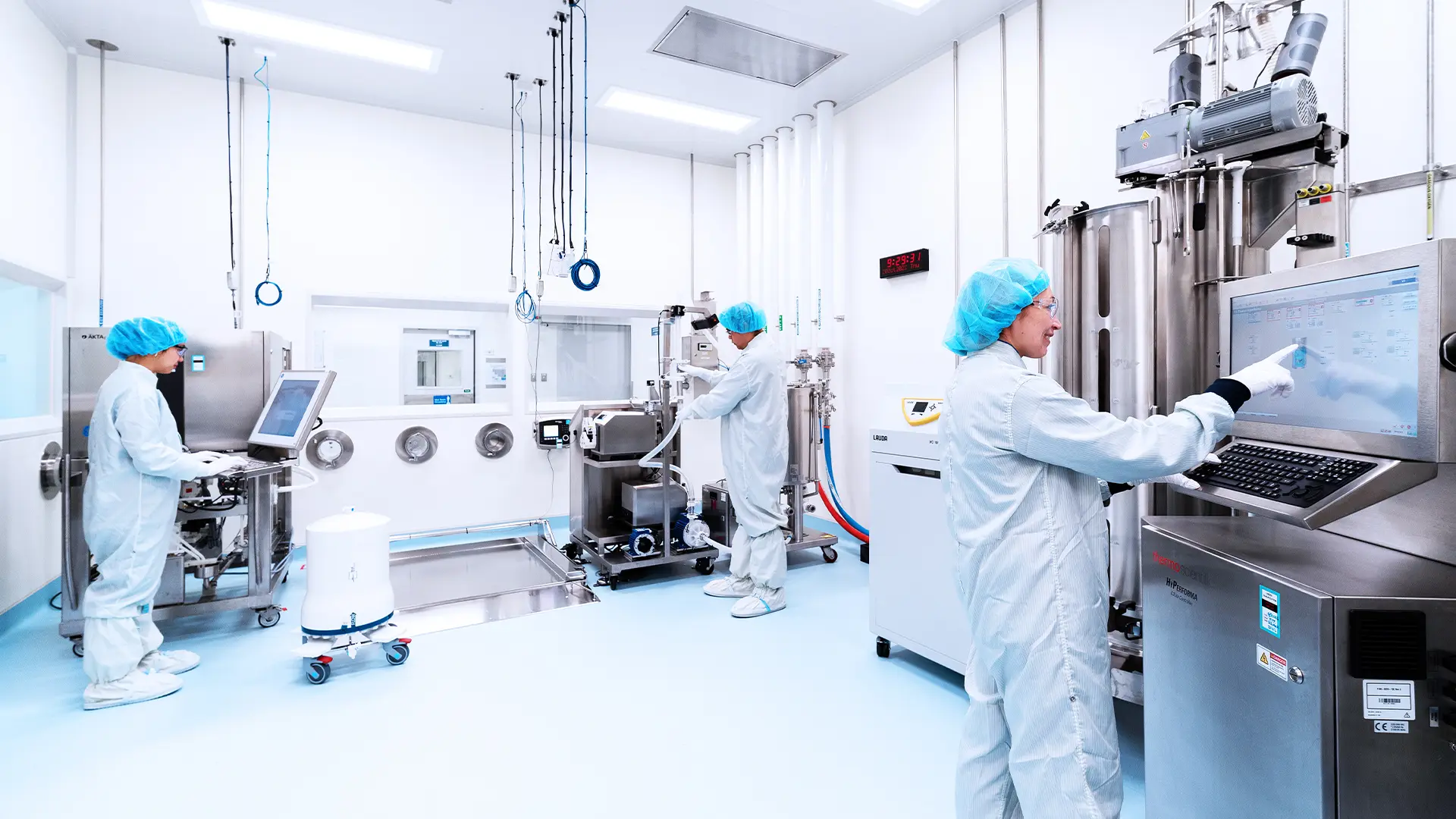
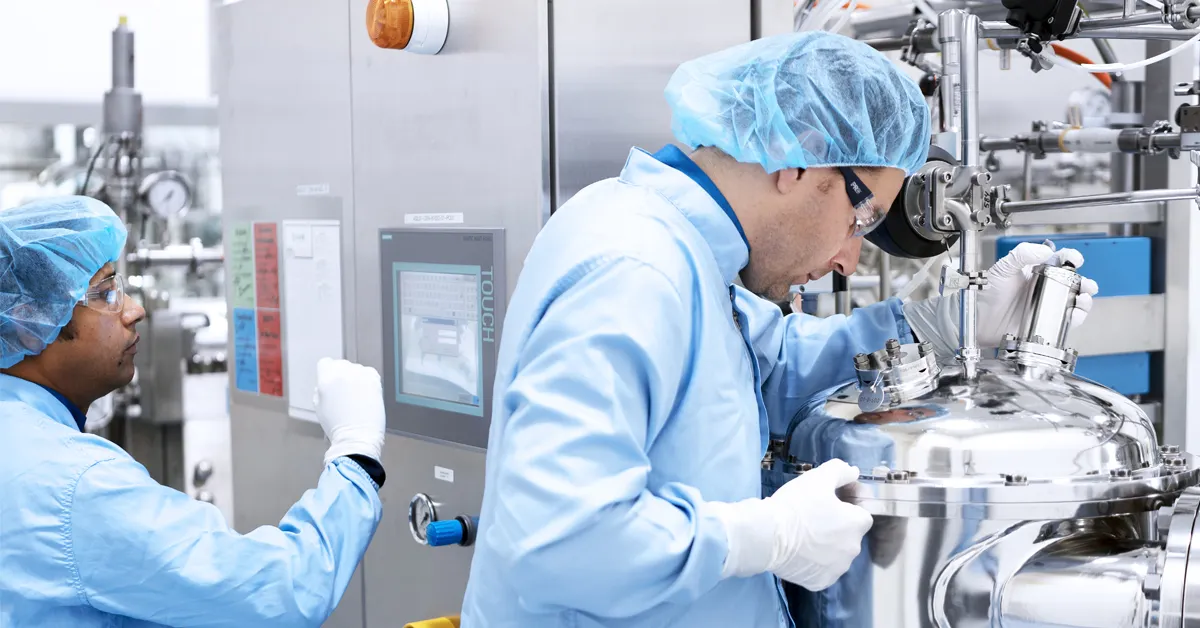
Microbial fermentation remains one of the most established platforms for microbial drug substance manufacturing, used to produce recombinant proteins, vaccine antigens, and enzyme therapeutics. Sponsors evaluating a CDMO for microbial fermentation typically look for process development expertise, scalable fermentation capacity, and robust quality systems, the foundation for carrying a program from development through GMP manufacture.
BioCina's Adelaide facility has more than 30 years of E. coli-based microbial fermentation experience and has cloned and expressed 100+ microbial products. The site covers strain onboarding, upstream process development, fermentation, recovery, and purification through to QC testing and QA batch release, with refolding available for programs expressed as inclusion bodies, under a quality system licensed by the Australian TGA and aligned with FDA and EMA expectations.
Microbial Fermentation Expertise from Development to GMP Manufacturing
Capacity constraints, batch-to-batch yield variability, and regulatory scrutiny shape most decisions around microbial biologics manufacturing. Process design plays a critical role in controlling these risks.
BioCina applies a Quality by Design (QbD) approach to microbial process development, evaluating critical process parameters such as media composition, induction strategy, fed-batch profile, and dissolved oxygen control to establish robust control strategies for scale-up and GMP manufacture.
Fermentation scale-up carries real technical risk: oxygen transfer, agitation, mixing time, and heat transfer all shift with vessel size. [1] BioCina's fermentation platform is designed to progressively characterize and align process parameters and control strategies across scales, from development through GMP manufacture, reducing scale-up risk as programs advance.
Comprehensive Microbial Upstream, Refolding & Downstream Purification
Escherichia coli fermentation is BioCina's primary bacterial expression system, historically used to produce roughly 30% of currently approved recombinant therapeutic proteins, supporting programs across K-12 and B strain backgrounds. [2] The platform extends beyond E. coli to Streptococcus pneumoniae and Salmonella enterica for vaccine antigen manufacturing programs, both established organisms for whole-cell and antigen-carrier vaccine strategies, [3] and to yeast expression systems, including Pichia pastoris and Saccharomyces cerevisiae, at development scale for programs where glycosylation or secretion requirements make E. coli expression a less ideal fit. [4] BioCina also onboards client-supplied host strains and expression vectors, adapting to the client's existing system rather than requiring a restart.
The platform has produced bulk drug substance and intermediates across recombinant proteins, vaccine antigens, antibody fragments, growth hormones, and enzymes, including scFv, diabody, and nanobody formats. The platform also supports multiepitope and whole-cell recombinant vaccine programs. As one example, BioCina has developed antibody fragment formats, including a nanobody and a diabody, for two different oncology clients, demonstrating experience across multiple antibody fragment architectures.
Microbial fermentation suits programs where the target protein doesn't need mammalian-style post-translational modification: recombinant proteins, enzymes, vaccine antigens, antibody fragments, and inclusion-body-expressed proteins are all common fits for BioCina's upstream processing platform. Where a program specifically requires complex glycosylation patterns, a mammalian or yeast-based platform is often a better starting point.
Downstream, BioCina operates a 3,000 L refold tank, the largest protein refolding capacity at any Australian CDMO, supporting large-scale inclusion body refolding. Downstream processing is tailored to the expression system and product characteristics, with recovery and purification strategies addressing intracellular expression and inclusion bodies, [5] while managing process-related impurities such as host cell protein and residual DNA. Continuous cell lysis releases inclusion bodies and soluble intracellular product from fermentation campaigns up to 500 L, with continuous-flow centrifugation supporting cell harvesting and inclusion body recovery and concentration. Chromatography platforms, including large-diameter column systems, support scale-up of established purification trains from development through commercial-scale campaigns.
Fermentation Development and Manufacturing Scales
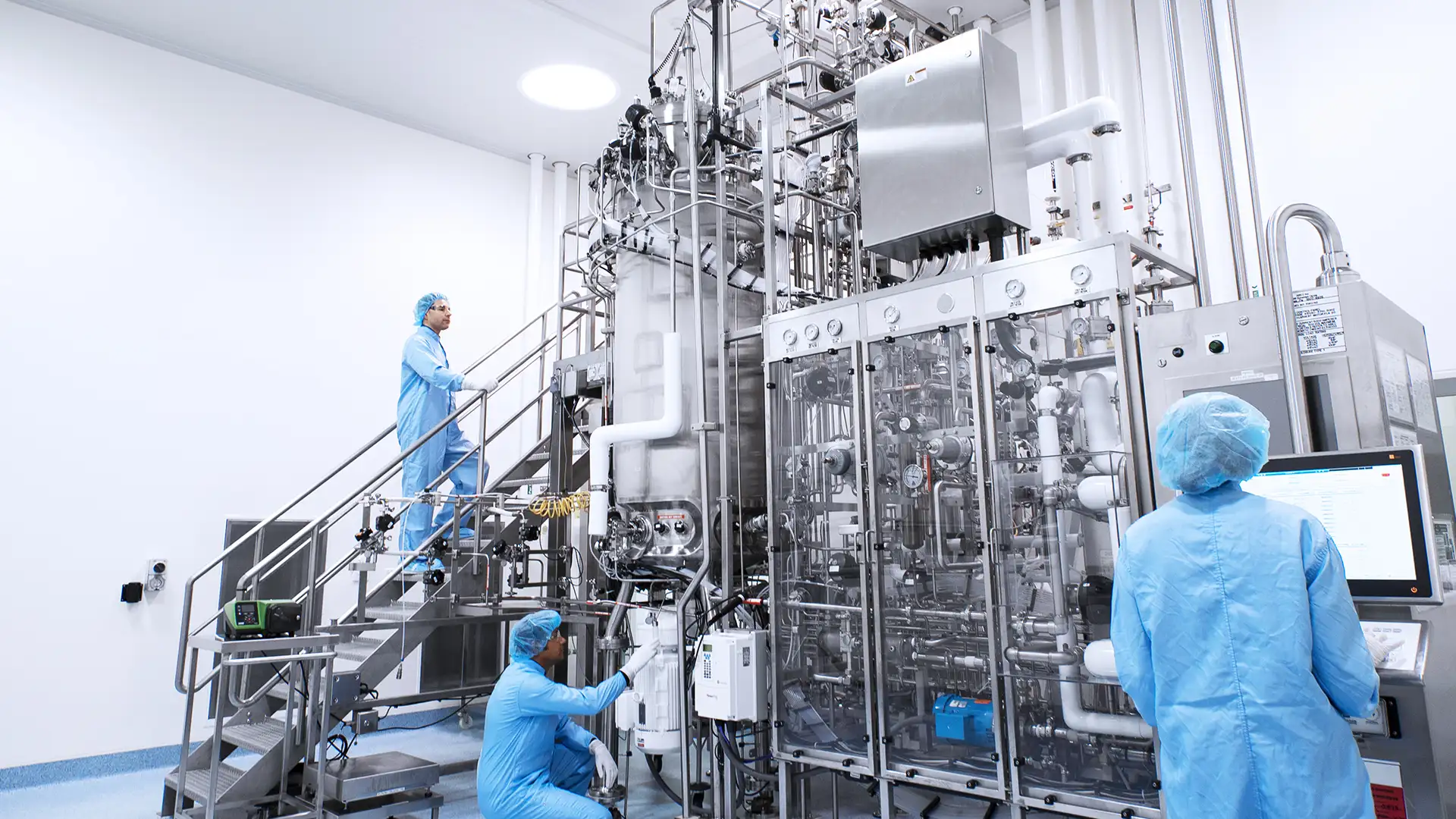
BioCina structures its fermentation platform as a single continuum spanning process development through commercial supply, so a program does not need to change manufacturing partners as the program advances.
| Stage | Equipment | Working Volume |
|---|---|---|
| Process Development | 2 L fermenters, 8 parallel units | 400 mL to 1 L |
| Scale-Up | 30 L stainless steel fermenter | 6 to 20 L |
| cGMP Manufacturing | 435 L single-use bioreactor (SUB) | 65 to 300 L |
| cGMP Manufacturing | 750 L stainless steel fermenter | 200 to 500 L |
CDMOs running fermentation trains across separate facilities, or under separate ownership structures, introduce an inter-site technology transfer step each time a program moves between scales. Keeping development, scale-up, and GMP manufacturing within the same site reduces the need for inter-site transfer and simplifies knowledge continuity as programs progress.
Quality Systems Built for Global Regulatory Requirements
BioCina's Adelaide site holds an active TGA manufacturing licence for clinical and commercial biological drug substance manufacturing, along with a TGA contract testing licence covering biological, chemical, physical, and molecular testing. The site's operating history includes taking a biologic product from clinical development through to commercial-scale manufacturing, and its manufacturing SOPs and quality framework have been successfully inspected by the US FDA with zero observations. BioCina has maintained a record free of critical GMP observations across subsequent inspections.
Australia's GMP framework is based on the PIC/S Guide to GMP, and the TGA also adopts relevant international scientific guidelines while maintaining regulatory cooperation with major international authorities. BioCina's GMP documentation is generated within this internationally aligned framework, supporting programs intended for submission across multiple jurisdictions.
Quality oversight is applied on a phase-appropriate basis, with QC testing and QA batch release before disposition, and method qualification and validation requirements increasing as programs progress toward commercial manufacture. QP batch release is available for EU-bound programs.
Integrated Drug Substance to Sterile Drug Product
Microbial drug substance manufactured in Adelaide transfers to BioCina's sterile fill-finish facility in Perth. A single project management team coordinates the program from fermentation through finished, released drug product. This integrated model simplifies coordination between drug substance and drug product manufacturing, reducing technology-transfer interfaces and handoff risk as programs progress toward commercial supply.
End-to-End Continuity: Fermentation to Sterile Drug Product
Moving a therapeutic program from drug substance to drug product manufacturing often introduces scheduling delays, technical handoff risk, and regulatory complexity. BioCina reduces multi-vendor friction by managing both stages across our two-site network. By connecting cGMP microbial fermentation in Adelaide directly with sterile drug product fill-finish in Perth, clients get a single accountable partner and a streamlined supply chain from bulk drug substance to finished vial or syringe. The same E. coli fermentation platform also supports plasmid DNA (pDNA) manufacturing, extending that same integrated network to sponsors with pDNA programs in their pipeline.
FAQs
Ready to Scale Your Microbial Biologic Program?
BioCina supports microbial biologic programs from first strain through commercial cGMP supply, combining an established fermentation scale continuum with a regulatory record across the TGA, FDA, and EMA.
Talk to Our Technical Team