
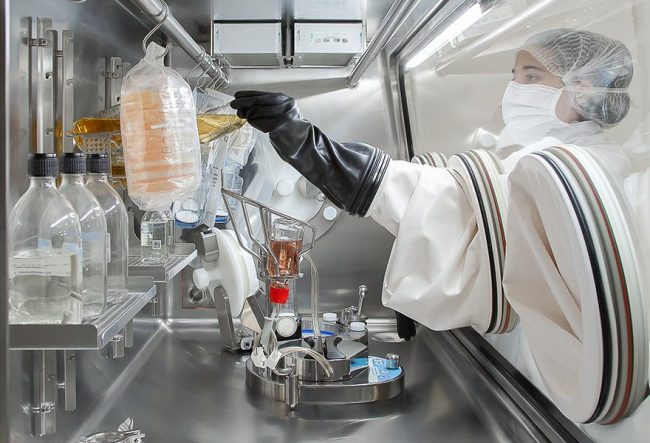
Cytotoxic drug manufacturing is a specialized area of pharmaceutical production focused on the safe handling, formulation, and fill-finish of compounds that are toxic to living cells. Most cytotoxic drugs are used in oncology to treat cancer. Their mechanism of action, targeting rapidly dividing cells, makes them among the most potent and hazardous substances manufactured in pharmaceutical facilities and why specialist oncology CDMO capability is essential for programs in this category. For this reason, cytotoxic drug manufacturing operates under a distinct set of containment, safety, and regulatory requirements that go significantly beyond standard GMP sterile manufacturing.
What Are Cytotoxic Drugs?
The term cytotoxic describes compounds that are toxic to cells. In pharmaceutical manufacturing, the category primarily includes:
- Chemotherapy agents used in oncology treatment, including antimetabolites, alkylating agents, anthracyclines, and vinca alkaloids
- Oncology immunomodulators and certain targeted therapies with cytotoxic mechanisms
- High-potency active pharmaceutical ingredients (HPAPIs) with occupational exposure limits at or below microgram-per-cubic-meter concentrations
These compounds are classified using occupational exposure bands (OEBs). OEB 4 and OEB 5 compounds require the most stringent containment measures. While cytotoxic drugs provide clinical benefit to patients, as cross-contaminants in a manufacturing environment they pose serious risk to operators and to other products. This dual nature is what makes cytotoxic drug manufacturing both technically demanding and operationally distinct from general sterile injectable manufacturing.
Why Cytotoxic Drug Manufacturing Requires Dedicated Facilities
Cytotoxic manufacturing and high-potency sterile manufacturing cannot safely share infrastructure with standard pharmaceutical production. The risk of product-to-product cross-contamination, environmental spread, and operator exposure requires physical separation at the facility level.
A purpose-built cytotoxic manufacturing environment includes:
- A self-contained manufacturing area, physically separated from the broader facility with its own HVAC, environmental monitoring, and quality systems
- Dedicated containment fill-finish infrastructure, designed and validated for cytotoxic and high-potency non-cytotoxic products under controlled changeover and cleaning protocols
- Validated cleaning and decontamination procedures specific to cytotoxic residue limits
- Operators trained in cytotoxic-specific handling, gowning, and emergency response protocols
- Dedicated waste handling processes compliant with cytotoxic waste disposal regulations
Manufacturing cytotoxic drugs without this dedicated infrastructure creates regulatory risk, supply chain risk, and patient safety risk that most pharmaceutical companies cannot accept. BioCina’s cytotoxic manufacturing facility is purpose-built and physically separated from its broader fill-finish platform, with its own HVAC, environmental monitoring, and quality infrastructure, and has operated continuously for over 30 years through successive regulatory inspection cycles..
The Role of RABS in Cytotoxic Fill-Finish
Regulatory Requirements for Cytotoxic Drug Manufacturing
Cytotoxic drug manufacturing is governed by the same GMP frameworks that HAZapply to all pharmaceutical manufacturing, including FDA 21 CFR Parts 210/211, EU GMP guidelines, and TGA requirements. Cytotoxic-specific obligations add further compliance layers:
- Dedicated facility or physically segregated suite requirements to prevent cross-contamination
- OEL and OEB documentation for each compound manufactured
- Operator health monitoring and occupational exposure assessment programs
- Validated cleaning procedures with cytotoxic-specific residue acceptance limits
- Cytotoxic waste classification and disposal documentation
Regulatory agencies inspecting cytotoxic manufacturing sites assess not only GMP compliance but the adequacy of containment infrastructure and operator safety systems. BioCina’s cytotoxic manufacturing operations are TGA-approved, with a continuous GMP compliance record built through successive TGA inspection cycles. This established regulatory standing provides a robust foundation for programs targeting Australian and global markets through TGA-approved supply.
What a Cytotoxic CDMO Partner Provides
Most clinical-stage oncology companies do not have in-house cytotoxic fill-finish capability. The capital investment, regulatory expertise, and specialized workforce required to build and qualify a compliant cytotoxic environment are prohibitive for all but the largest pharmaceutical organizations. An oncology manufacturing partner with dedicated infrastructure and established regulatory standing provides what most drug developers cannot build themselves. CDMO partnerships are the standard model for cytotoxic fill-finish at every stage of development.
A capable cytotoxic CDMO with high-potency manufacturing expertise will support:
- Feasibility assessment and formulation development for cytotoxic injectables
- Engineering and toxicology batch manufacture for regulatory submissions
- Phase I through Phase III clinical trial supply under GMP
- Process validation and scale-up for commercial manufacturing
- Multi-SKU lifecycle management for established oncology portfolios
- Technology transfer from in-house or third-party manufacturing sites
FAQs
What compounds are classified as cytotoxic?
Cytotoxic compounds include most traditional chemotherapy agents such as alkylating agents, antimetabolites, and anthracyclines, as well as certain targeted cancer therapies and high-potency active pharmaceutical ingredients (HPAPIs) with mechanisms resulting in cell death or inhibition of cell proliferation. Classification is based on pharmacological mechanism and occupational exposure band, not a single universal list.
What containment is required for cytotoxic drug manufacturing?
Cytotoxic manufacturing requires dedicated, physically separated facilities with validated barrier filling technology such as RABS, controlled ventilation and pressure differentials appropriate to the compound’s hazard classification, cytotoxic-specific cleaning validation, trained personnel with occupational health monitoring, and compliant cytotoxic waste disposal. Specific requirements depend on the OEB classification of the compound.
Can cytotoxic and non-cytotoxic products be manufactured at the same site?
Yes, but not in shared manufacturing areas. Regulatory frameworks permit co-location at a single site provided cytotoxic operations are conducted in a physically separate, dedicated area with its own environmental controls, quality systems, and cleaning procedures. Shared infrastructure without this segregation creates cross-contamination risk that regulators will not accept.
Why is cytotoxic fill-finish CDMO capacity globally limited?
Establishing a compliant cytotoxic fill-finish capability requires significant capital investment, specialist engineering design, regulatory qualification, and a trained workforce. These barriers mean that even among established sterile injectable CDMOs, very few operate cytotoxic fill-finish at commercial scale under GMP conditions. Within Asia-Pacific in particular, the number of sites with full regulatory approval for cytotoxic injectable manufacturing is very small.
BioCina's Cytotoxic Manufacturing Capability
BioCina has operated a dedicated oncology fill-finish manufacturing for over 30 years. The oncology area encompasses purpose-built laboratories and RABS fill-finish lines, physically separated from the broader fill-finish platform. Fill volumes from 1 to 100 mL; batch sizes from 15 L to 1,180 L; 10M+ unit annual capacity. To discuss your oncology program, contact BioCina.
SME VERIFICATION REQUIRED | COUNTRY COUNT: The ’70+ countries’ figure for cytotoxic supply has not been flagged by SME for the cytotoxic questionnaire and is retained here. However, a separate SME note in the BFS questionnaire indicated that BFS-specific registered markets are now approximately 6. Confirm whether the 70+ countries claim is still valid for cytotoxic product supply specifically before publishing.
Reference
[1] Pharmaceutical Technology. Manufacturing Cytotoxics in a Multiproduct Facility. pharmaceutical-technology.com, October 2023.
[2] European Medicines Agency. Guideline on Setting Health Based Exposure Limits for Use in Risk Identification in the Manufacture of Different Medicinal Products in Shared Facilities. EMA/CHMP/CVMP/SWP/169430/2012, February 2014.
[3] U.S. Food and Drug Administration. 21 CFR Parts 210 and 211: Current Good Manufacturing Practice in Manufacturing, Processing, Packing, or Holding of Drugs.
[4] European Commission. EU Guidelines for Good Manufacturing Practice for Medicinal Products for Human and Veterinary Use, Part II and Annexes. EudraLex Volume 4.
Related pages: Cytotoxic Manufacturing | Sterile Vial Filling (RABS environment) | Discuss Your Oncology Program